Skip to content
Book Direct

973 East Broad Street · Columbus, OH

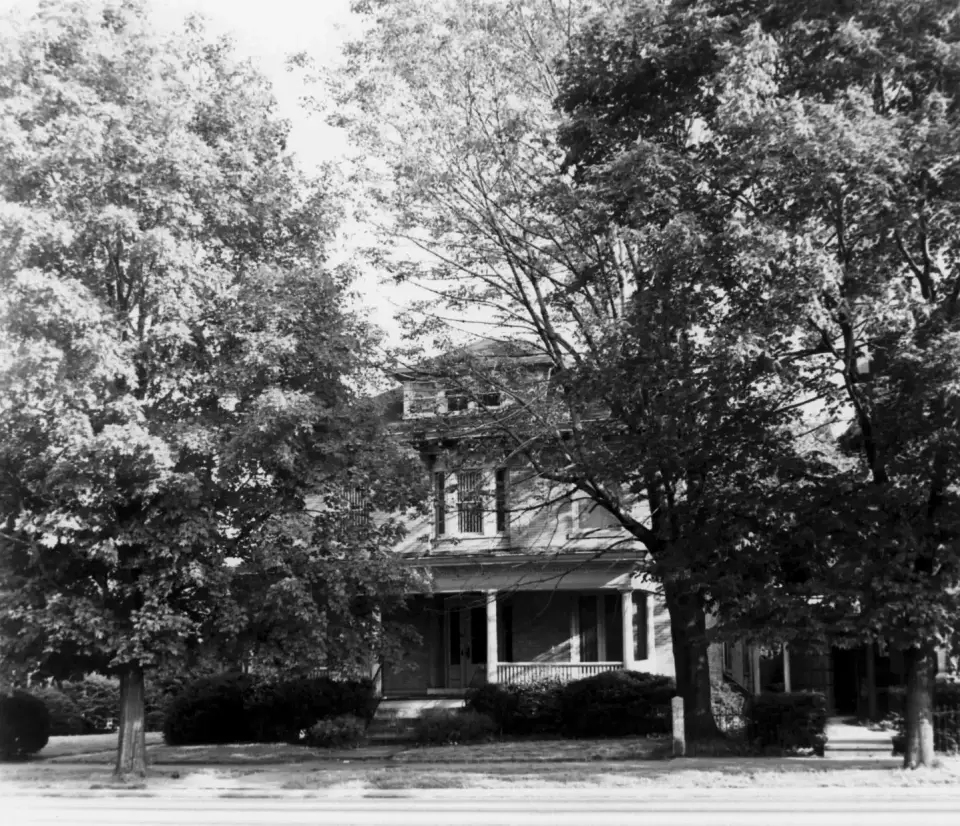
The Heyne-Zimmerman House at 973 East Broad behind its street trees (archival)
The Heyne-Zimmerman House · 1912

The house on Dream Street

Photo: Archive credit to confirm
The story

A story of ambition and adaptation

The story of 973 East Broad Street begins around 1912, when it was built for Carl G. Heyne, president of the American Cash Register Manufacturing Company, as a Colonial Revival residence on what was then Columbus's most fashionable avenue. Heyne's tenure was brief; by 1918, the home had passed to Charles Zimmerman, manager of Ohio Auto Sales, who lived there with his wife until his death in the early 1930s. The Zimmerman name would become permanently attached to the property, which is today listed on the National Register of Historic Places as the Heyne-Zimmerman House. For much of the later 20th century, the mansion took on a new life as the Charles Foley Art Gallery, a respected Columbus venue for modern and contemporary art that operated at this address for roughly forty years. In 2018, the property entered its most recent chapter when the city approved a variance for a mixed-use adaptive reuse project, permitting the historic structure to be converted into a six-room apartment hotel (bed and breakfast) with a commercial office, alongside new carriage house and apartment construction on the grounds—a transformation that carries the mansion's legacy forward as a place of hospitality rather than private residence.

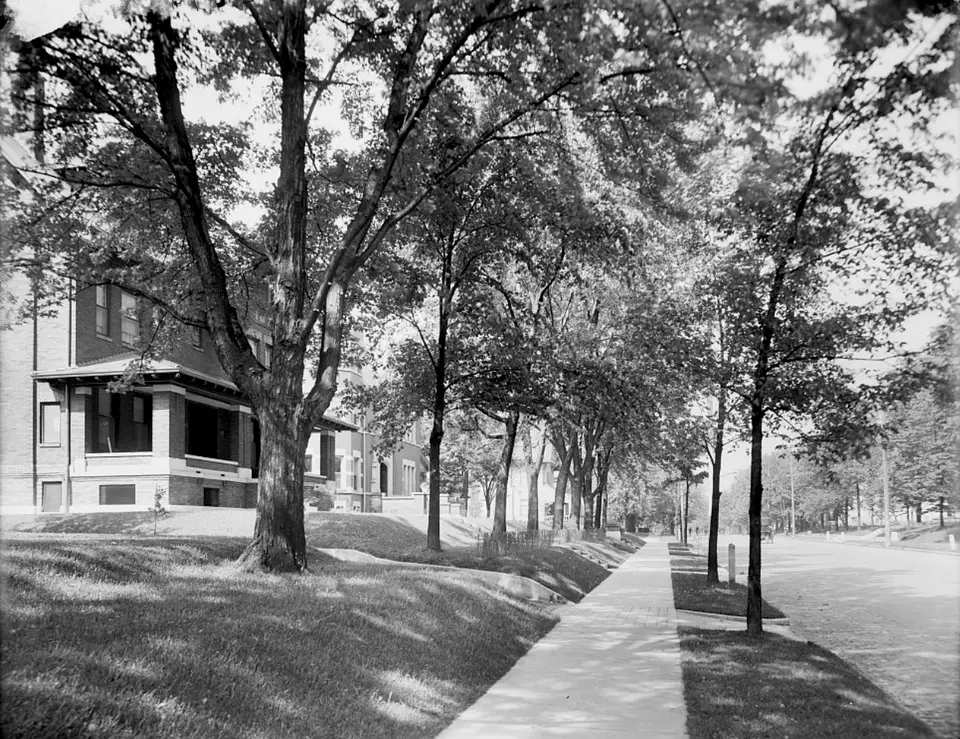
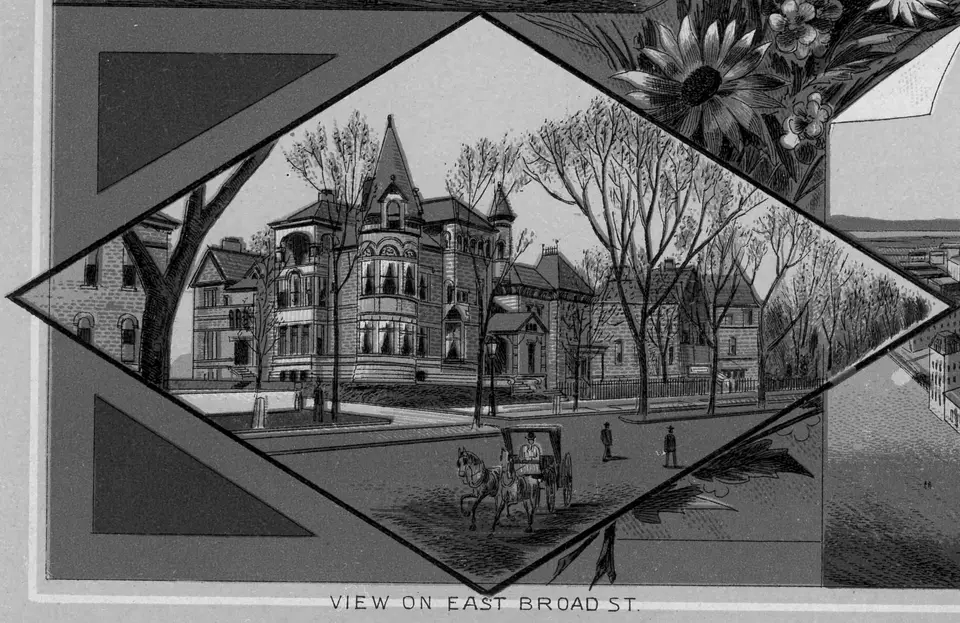
East Broad Street, Early 1900s (archival photograph)
Early 1900s · East Broad StreetArchive credit to confirm
Before 1912

The road east

  1. 1797

    Broad Street is laid out with the settlement of Franklinton; a new section follows in 1812, when Columbus is founded.

  2. 1831–33

    The Ohio Canal and the National Road arrive. Their traffic, noise and odors push the city's families of means to look east.

  3. 1838

    Alfred Kelley, “father of the Ohio Canal System,” drains a swampy tract and builds a Greek Revival mansion dismissed as “way out in the country” — just four blocks from the Statehouse.

  4. 1887

    Clinton DeWeese Firestone, co-founder of the Columbus Buggy Company, builds a five-level stone mansion at 580 East Broad.

  5. Late 1800s

    East Broad becomes the showcase of Columbus wealth: Colonial Revival, Queen Anne and Romanesque Revival houses for the city's industrial captains.

The street's full story
Timeline

1912 to today

  1. 1912

    Built for Carl G. Heyne

    A Colonial Revival residence for the president of the American Cash Register Manufacturing Company, on Columbus's most fashionable avenue.

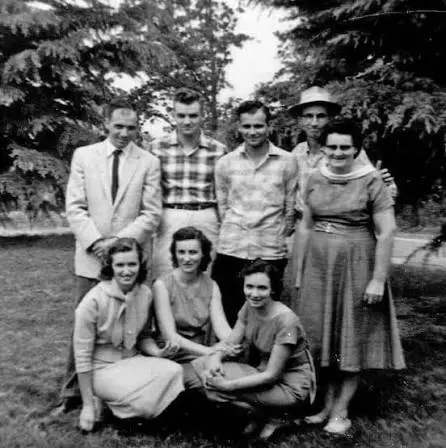
    The Heyne family, Undated (archival photograph)
    Undated · The Heyne familyHeyne family photograph — credit to confirm
  2. 1918

    The Zimmermans arrive

    Charles Zimmerman, manager of Ohio Auto Sales, makes the house his home with his wife.

  3. 1930s

    A name that stays

    Zimmerman dies in the early 1930s, but his name stays with the house. Today it is on the National Register of Historic Places as the Heyne-Zimmerman House.

  4. Foley era

    The Charles Foley Art Gallery

    For roughly forty years, a respected Columbus venue for modern and contemporary art operates at this address.

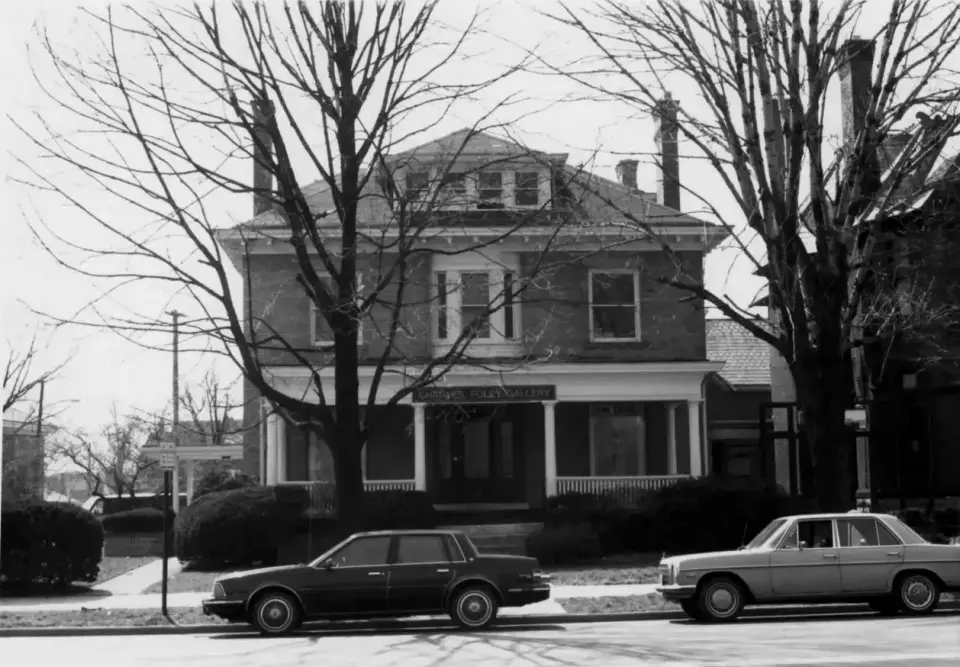
    No. 973 as the Charles Foley Gallery, April 1986 (archival photograph)
    April 1986 · No. 973 as the Charles Foley GalleryEast Broad St. MRA, National Register survey photo 55 — B. Powers, April 1986 (negatives: Ohio Historic Preservation Office)
  5. 2018

    A new use is approved

    The city approves a variance for adaptive reuse: a six-room apartment hotel with a commercial office, plus a new carriage house and apartments on the grounds.

  6. Today

    The Zimmerman

    The mansion's next chapter, as a place of hospitality rather than private residence.

The East Broad corridor

Columbus's Dream Street, 1889–1986

The street's story
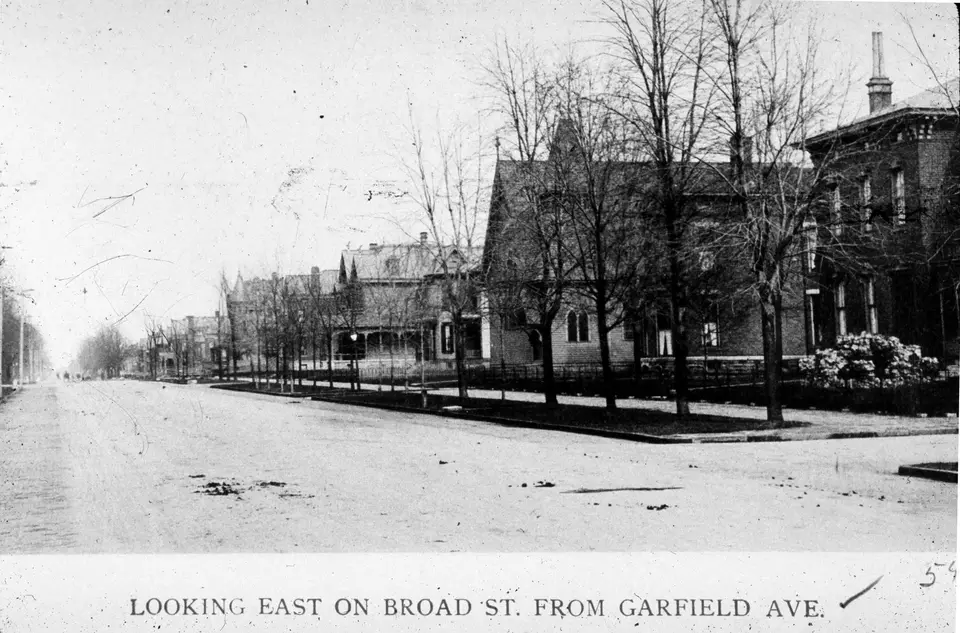
Looking east on Broad Street from Garfield Avenue, 1889 (archival photograph)
1889Looking east on Broad Street from Garfield Avenue The mansion row in its first flush: wide lawns, young trees, and a quiet road out of town.Postcard view — archive credit to confirm
The Firestone Mansion, 580 East Broad, 1893 (archival photograph)
1893The Firestone Mansion, 580 East Broad Clinton D. Firestone's five-level stone house, designed by Elah Terrell in 1887. Demolished 1962.Columbus Metropolitan Library, Columbus in Historic Photographs — Views of Columbus, Ohio (Ward Bros., 1893)
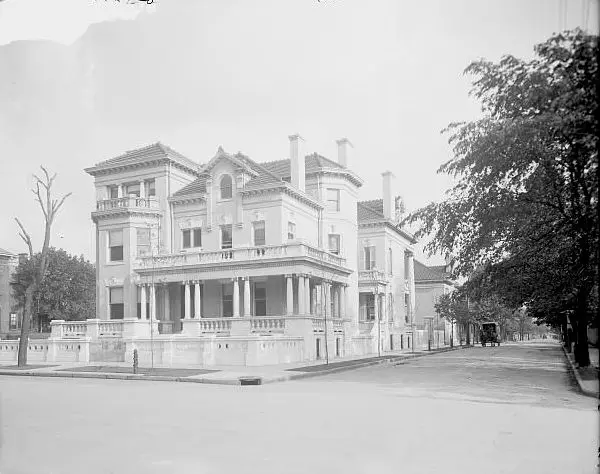
A residence on the East Broad mansion row, c. 1900 (archival photograph)
c. 1900A residence on the East Broad mansion row Balustrades, bay windows and a corner lot — the Gilded Age idea of arriving.Hartman residence — archive credit to confirm
East Broad Street, Early 1900s (archival photograph)
Early 1900sEast Broad Street Shade, deep setbacks and quiet: the qualities that drew Columbus's prominent families east.Archive credit to confirm
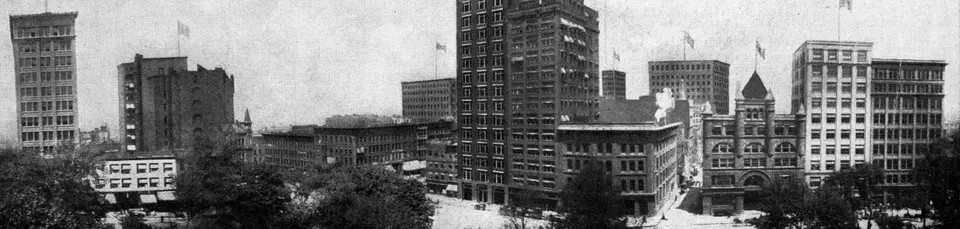
East Broad Street from the State Capitol, 1908 (archival photograph)
1908East Broad Street from the State Capitol Downtown from the Statehouse. Alfred Kelley's 1838 'country' mansion had stood just four blocks east.Archive credit to confirm
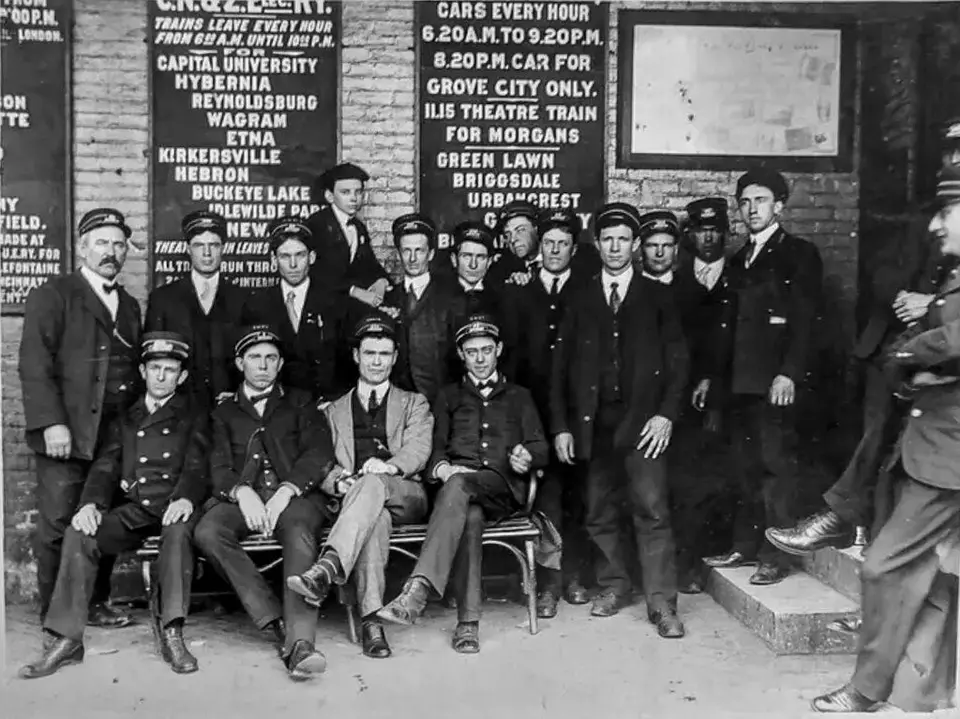
Trolley workers at the car barn, 1910 (archival photograph)
1910Trolley workers at the car barn Motormen and conductors under the line board — Grove City, Reynoldsburg, Buckeye Lake and beyond.Steven B. (riverrat18), Flickr · permission pending
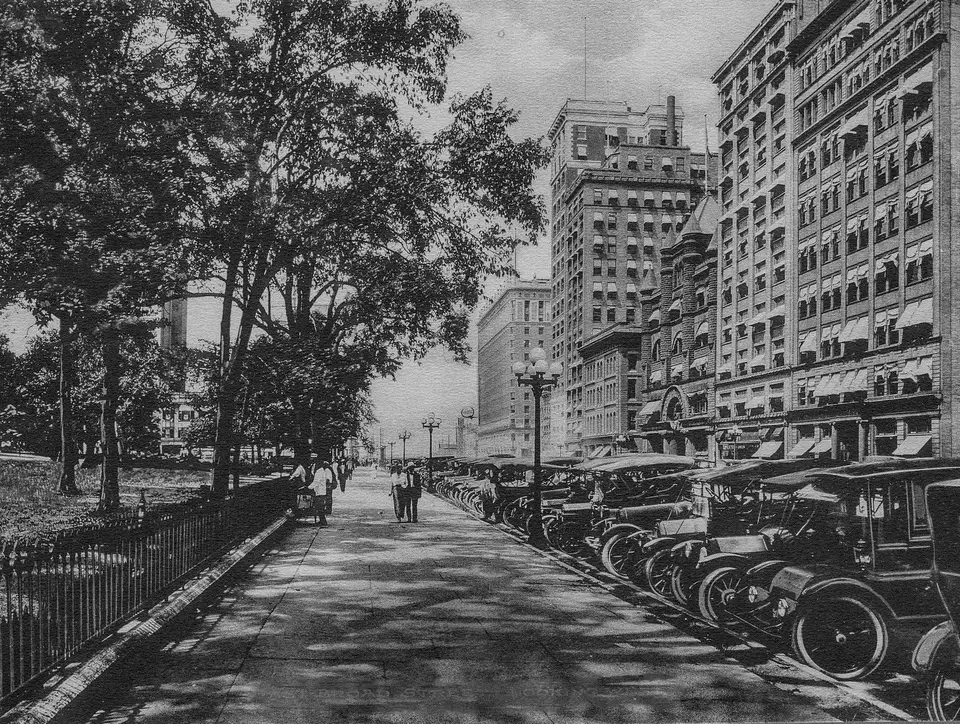
East Broad looking west, with the Outlook Building, 1916 (archival photograph)
1916East Broad looking west, with the Outlook Building Motorcars line the curb where carriages once waited — the avenue between two eras.Steven B. (riverrat18), Flickr · permission pending
No. 973 as the Charles Foley Gallery, April 1986 (archival photograph)
April 1986No. 973 as the Charles Foley Gallery Photographed for the East Broad Street National Register survey, with the Foley Gallery sign over the porch and a Jim Dine sign in the window.East Broad St. MRA, National Register survey photo 55 — B. Powers, April 1986 (negatives: Ohio Historic Preservation Office)
From the archive

No. 973 and the mansion row

From the mansion-row years to the 1986 survey for the street's National Register listing. Select a photograph to see it large.

Undated · No. 973 East Broad, in full leafThe Heyne-Zimmerman House behind its street trees: hipped roof, dormer and the deep columned porch.Archive credit to confirm
April 1986 · No. 973 as the Charles Foley GalleryPhotographed for the East Broad Street National Register survey, with the Foley Gallery sign over the porch and a Jim Dine sign in the window.East Broad St. MRA, National Register survey photo 55 — B. Powers, April 1986 (negatives: Ohio Historic Preservation Office)
1893 · The Firestone Mansion, 580 East BroadClinton D. Firestone's five-level stone house, designed by Elah Terrell in 1887. Demolished 1962.Columbus Metropolitan Library, Columbus in Historic Photographs — Views of Columbus, Ohio (Ward Bros., 1893)
c. 1900 · A residence on the East Broad mansion rowBalustrades, bay windows and a corner lot — the Gilded Age idea of arriving.Hartman residence — archive credit to confirm
Early 1900s · East Broad StreetShade, deep setbacks and quiet: the qualities that drew Columbus's prominent families east.Archive credit to confirm
1889 · Looking east on Broad Street from Garfield AvenueThe mansion row in its first flush: wide lawns, young trees, and a quiet road out of town.Postcard view — archive credit to confirm
1908 · East Broad Street from the State CapitolDowntown from the Statehouse. Alfred Kelley's 1838 'country' mansion had stood just four blocks east.Archive credit to confirm
1916 · East Broad looking west, with the Outlook BuildingMotorcars line the curb where carriages once waited — the avenue between two eras.Steven B. (riverrat18), Flickr · permission pending
1910 · Trolley workers at the car barnMotormen and conductors under the line board — Grove City, Reynoldsburg, Buckeye Lake and beyond.Steven B. (riverrat18), Flickr · permission pending
East Broad Street

Dream Street

How a quiet road to Granville became Columbus's showcase of wealth, and what survived.

Chapter I

From Quiet Road to "Dream Street"

Broad Street itself was first laid out around 1797 with the settlement of Franklinton, and a new section was built in 1812 when Columbus was founded. For decades, the city's wealthier residents preferred homes along Front Street with a view of the Scioto River. That changed after the Ohio Canal arrived in 1831 and the National Road was extended through Columbus in 1833. The resulting traffic, noise, and odors pushed families of means to look eastward.

East Broad Street was attractive precisely because it was quieter. It was the road to Granville, but early on, not many travelers used it. Land was relatively cheap, and the street was tree-lined. The first grand gesture came from Alfred Kelley, the lawyer, banker, and state legislator known as the "father of the Ohio Canal System." In 1838, he drained a swampy tract east of downtown and built a Greek Revival mansion that contemporaries dismissed as "way out in the country"—though it was only four blocks from the Statehouse. Others followed, and a pattern was set.
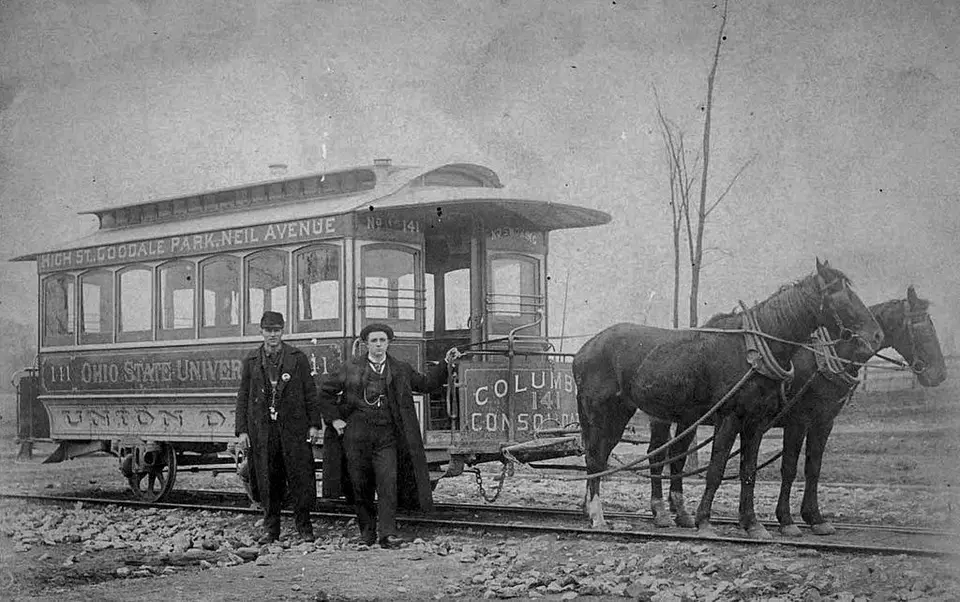
Horse-drawn trolley No. 141, Before 1891 (archival photograph)
Before 1891 · Horse-drawn trolley No. 141Steven B. (riverrat18), Flickr · permission pending
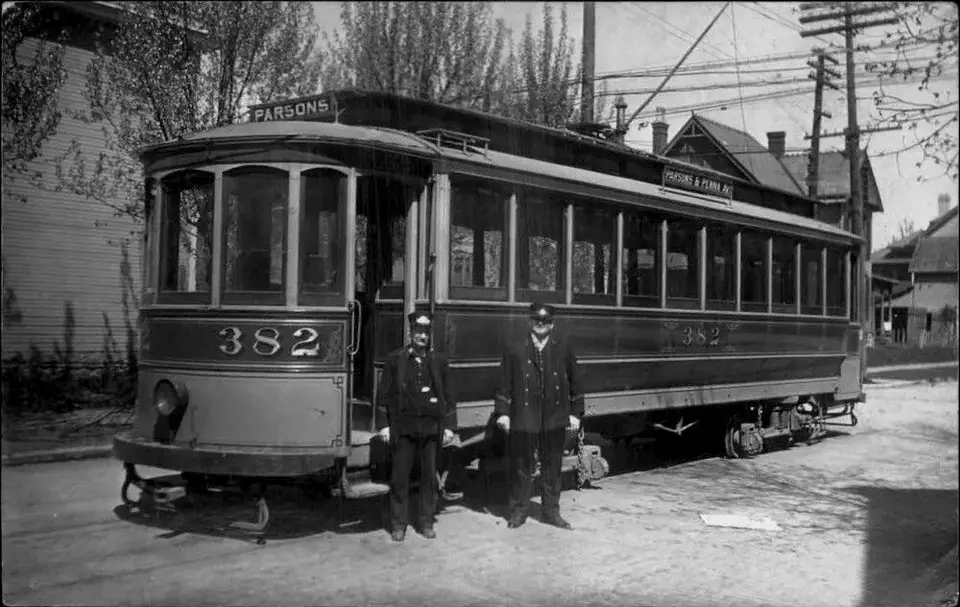
Trolley No. 382, Parsons Avenue line, Undated (archival photograph)
Undated · Trolley No. 382, Parsons Avenue lineSteven B. (riverrat18), Flickr · permission pending
Chapter II

The Gilded Age Mansion Row

By the late 19th century, East Broad Street had become the definitive showcase of Columbus wealth. The National Register documentation describes it as "one of the most fashionable streets in Columbus and the eastside address of many of Columbus' prominent businessmen and professionals." The houses reflected a range of popular styles, particularly adaptations of Colonial Revival, but also Queen Anne and Romanesque Revival.

The residents were the city's industrial captains. Clinton DeWeese Firestone, co-founder of the Columbus Buggy Company—at one point the world's largest manufacturer of light buggies—built a five-level stone mansion at 580 East Broad Street in 1887, designed by architect Elah Terrell. Charles E. Morris, owner of Morris Ironworks, built his home on the street. Carl G. Heyne, president of the American Cash Register Manufacturing Company, lived at 973 East Broad from 1912 to 1914. And Harry P. Wolfe, director of The Ohio State Journal and manager of the Wolfe Brothers Shoe Company, kept a house at 974 East Broad.

The street's evolution continued into the early 1900s, when luxury apartment buildings were added to the mix of single-family mansions. The East Broad Street Historic District was later listed on the National Register of Historic Places in 1987, recognizing the surviving concentration of this residential heritage.

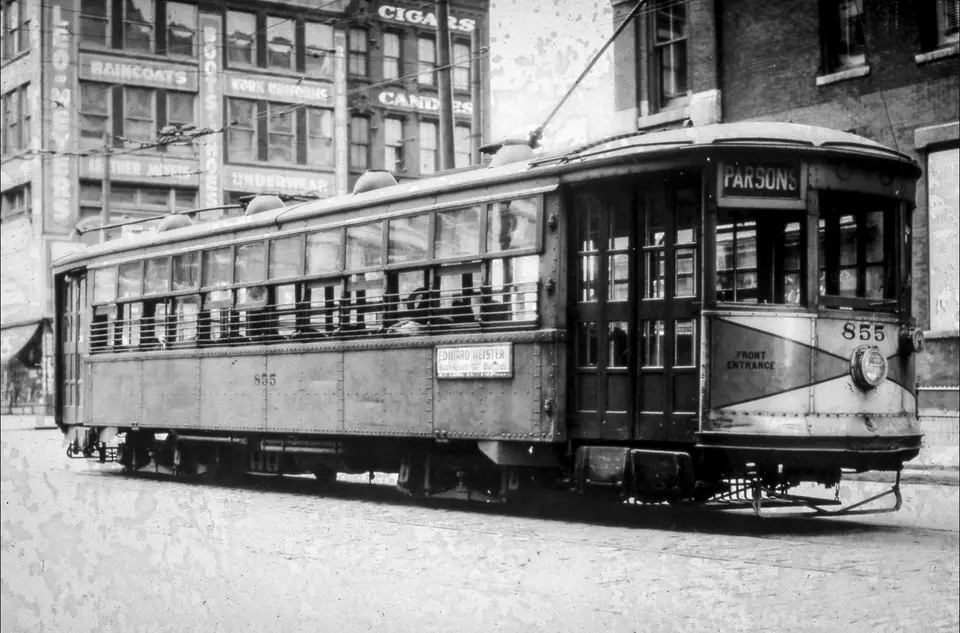
Parsons Avenue streetcar No. 855, Undated (archival photograph)
Undated · Parsons Avenue streetcar No. 855Archive credit to confirm
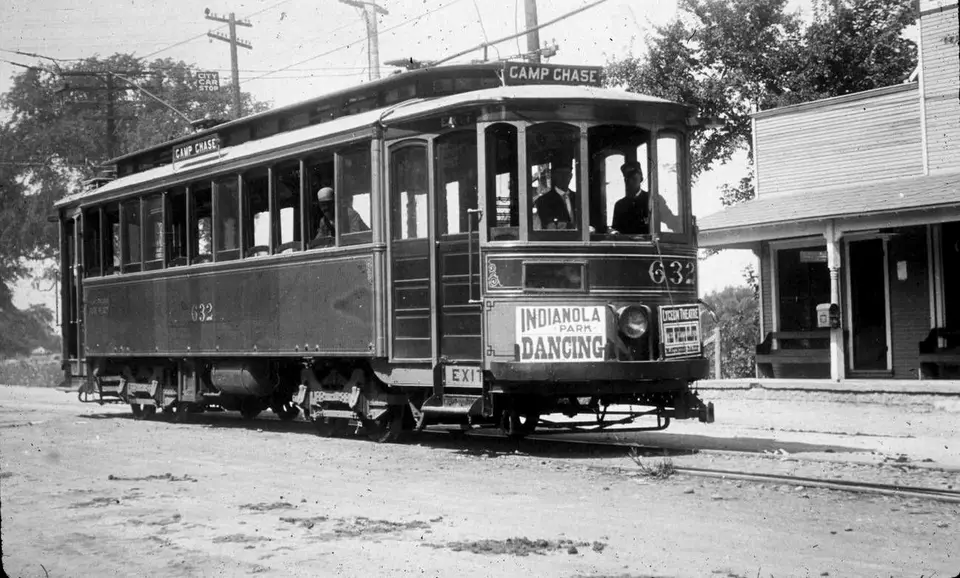
Camp Chase streetcar No. 632, West Broad Street, 1905 (archival photograph)
1905 · Camp Chase streetcar No. 632, West Broad StreetArchive credit to confirm
Chapter III

A Cautionary Arc

The glory was not permanent. By the time of the Second World War, the "top-hat-and-tails" era had faded. Many of the great mansions were converted to offices, boarding houses, or nursing homes, and some were lost altogether—the Firestone mansion was demolished in 1962. But enough of the street's grand residential fabric survived to earn historic designation, and the Heyne-Zimmerman House remains a representative piece of that story: a Colonial Revival home built for a businessman on what was then Columbus's most prestigious avenue—now poised to begin its next chapter as a boutique hospitality destination.

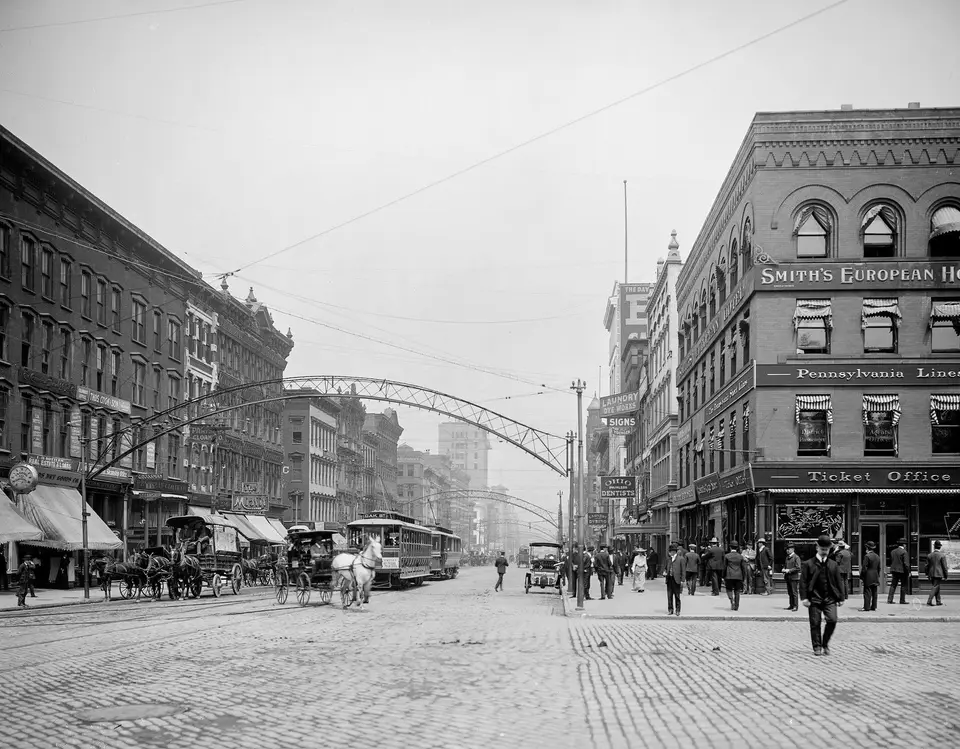
North High Street from Broad, 1910 (archival photograph)
1910 · North High Street from BroadSteven B. (riverrat18), Flickr · permission pending
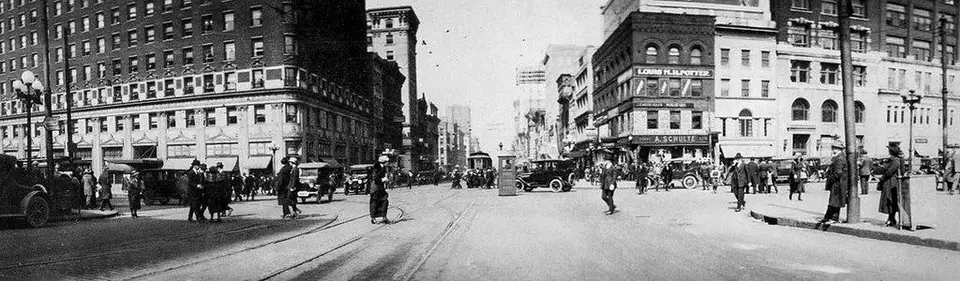
Broad and High Streets looking north, 1922 (archival photograph)
1922 · Broad and High Streets looking northSteven B. (riverrat18), Flickr · permission pending
Credits

Archival photographs

Historic images are shown in black-and-white or sepia, never colourised. With thanks to the archives and collectors below.

  • Undated — No. 973 East Broad, in full leaf. Archive credit to confirm
  • April 1986 — No. 973 as the Charles Foley Gallery. East Broad St. MRA, National Register survey photo 55 — B. Powers, April 1986 (negatives: Ohio Historic Preservation Office)
  • Undated — The Heyne family. Heyne family photograph — credit to confirm
  • 1889 — Looking east on Broad Street from Garfield Avenue. Postcard view — archive credit to confirm
  • 1893 — The Firestone Mansion, 580 East Broad. Columbus Metropolitan Library, Columbus in Historic Photographs — Views of Columbus, Ohio (Ward Bros., 1893)
  • c. 1900 — A residence on the East Broad mansion row. Hartman residence — archive credit to confirm
  • Early 1900s — East Broad Street. Archive credit to confirm
  • 1908 — East Broad Street from the State Capitol. Archive credit to confirm
  • 1910 — Trolley workers at the car barn. Steven B. (riverrat18), Flickr (permission pending)
  • 1910 — North High Street from Broad. Steven B. (riverrat18), Flickr (permission pending)
  • 1916 — East Broad looking west, with the Outlook Building. Steven B. (riverrat18), Flickr (permission pending)
  • 1922 — Broad and High Streets looking north. Steven B. (riverrat18), Flickr (permission pending)
  • Before 1891 — Horse-drawn trolley No. 141. Steven B. (riverrat18), Flickr (permission pending)
  • Undated — Trolley No. 382, Parsons Avenue line. Steven B. (riverrat18), Flickr (permission pending)
  • Undated — Parsons Avenue streetcar No. 855. Archive credit to confirm
  • 1905 — Camp Chase streetcar No. 632, West Broad Street. Archive credit to confirm
Reserve

Stay with us

Book any of the six rooms direct with AirButler, our hosting partner, with no booking-site fees.

Check availability

973 East Broad Street · Columbus, OH 43205